
Bhaktapur's Taleju white horse jatra and Thimi's Khan Piyanhu jatra conclude

The Payo Dyo, or sword jatra, and the jatra of Taleju's vehicle, the white horse, which began at midnight on Vijaya Dashami in Bhaktapur, concluded on Thursday morning, the day of Ekadashi. Throughout the day, the deities of Navadurga Bhawani stationed at the Brahmayani temple had paraded around the city's neighborhoods at night before reaching Durbar Square.
According to tradition, younger sister Brahmayani pays her respects to elder sister Taleju Bhawani there, after which a tantric ritual is performed. The Navadurga deities then returned to the Deva Griha at night, while Taleju, after a circuit of the Jagannath temple, was brought into the Deva Griha, bringing the jatra to a close by early morning.
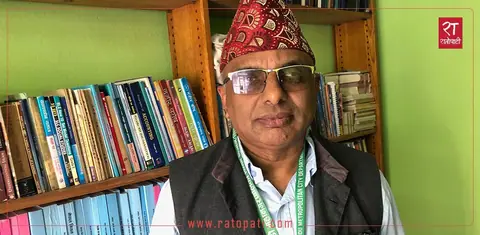
According to Narendra Prasad Joshi, former chief caretaker of Taleju, the jatra begins after the sword is ritually handed over from Taleju's Agam house at midnight under tantric procedure. After the Rajopadhyay priests carry the Payo Dyo on their shoulders from Mulchowk to Beko Chowk, the public is allowed to view and worship it.
Meanwhile, in Madhyapur Thimi, the Khan Piyanhu Jatra was celebrated on Thursday, featuring displays of Malla-era martial arts. The procession sets out from the Dyo Chhen of Taleju Bhawani in Layku, the site of the former royal palace. Various communities linked to the palace take part, with guthiyars dressed in traditional attire performing martial displays with swords and shields in neighborhood after neighborhood.
The procession traditionally travels toward Inae Tole and Duipokhari up to Digu Bhairav on the upper side, and through Dathu Tole to Balkumari on the lower side. The offering made to Taleju Bhawani on Navami, along with the deities inside Kot and the palace's royal sceptre, are also carried along in the city procession.
Sources
Nepal's top stories, twice a day on video
Morning and evening: short, clear and sourced (in Nepali).
Subscribe on YouTubeFollow on Facebook